
April 2024
This is the third part of the series “A Japanese house in Amsterdam”. The first part can be found here: A Japanese house in Amsterdam.
Translated from the Dutch version.
I
On 19 April 1600, a Dutch galleon belonging to a precursor of the Dutch East India Company ran aground on the east coast of the Japanese island of Kyūshū. Battered by a storm on the high seas, De Liefde(The Love) washed up on the beach of the small island of Kuroshima in the blue Bay of Usuki. The sailing ship had left the port of Rotterdam two years earlier with four other ships, and the small fleet’s goal was to reach the Japanese archipelago via the Strait of Magellan. – 1
More dead than alive, the crew of De Liefde had managed to sail into the bay from the open sea and secure themselves from further harm. A first encounter between the Dutch and the Japanese followed. It was a brief encounter because, alerted by local fishermen, the imperial guard arrived on the scene and took the crew prisoner. A handful survived and were soon released to remain in the land of the rising sun for many years.
This first encounter between giant hairy men and the much smaller yellow-skinned people with almond-shaped eyes was also the beginning of a centuries-long presence of the Dutch in Japan. And with it, it was the beginning of diplomatic relations between the two countries.
Initially, Dutch trade did not go very smoothly. A first trading post was established in Hirado in 1609, but it was difficult to build up a lucrative trade due to competition from Portuguese, Chinese and Japanese traders. The Dutch did not let themselves be discouraged and from around 1623 the tide began to turn in their favour. Trade grew and in 1641 the VOC trading post was moved to the island of Deshima in the port of Nagasaki, where the Dutch were the only European nation still allowed to trade with Japan. This would last until around the end of the Edo period in 1868.
II
When we travel back to present-day Amsterdam, the city from which many people once left for the East and which was remembered with nostalgia by singing old Dutch songs, the first pressing question that arises is: What is the purpose of a Japanese house in the Jordaan, this old neighbourhood near its city centre? Why bothering building a new house with a Japanese architecture there?
The reason is simple: the house builds a bridge between Japan and the Netherlands. Between two worlds. In particular, between two world cities, each a cultural epicentre of inestimable value: Kyoto and Amsterdam.
Both cities are paragons of art and history. Of liveability and tranquillity, of harmony and beauty.
The transitory and the eternal. And so this Japanese house will symbolise the lasting bond between the two countries that have been connected since 1600. It will serve as a model for a new bond with an eye to the past, however painful at times, as well as to the present and the future.
It is for that reason fitting to give this building the name:
De Liefde
(The Love)
In Japanese: 愛 (ai).
III
What will the Japanese house in Amsterdam’s Jordaan district look like? How will a house that appeals to the imagination as an oriental structure be built from materials that are hardly used in the Netherlands today and yet fit into a typical Amsterdam neighbourhood like the Jordaan? How will De Liefde blend into its surroundings?
With love, of course.
IV
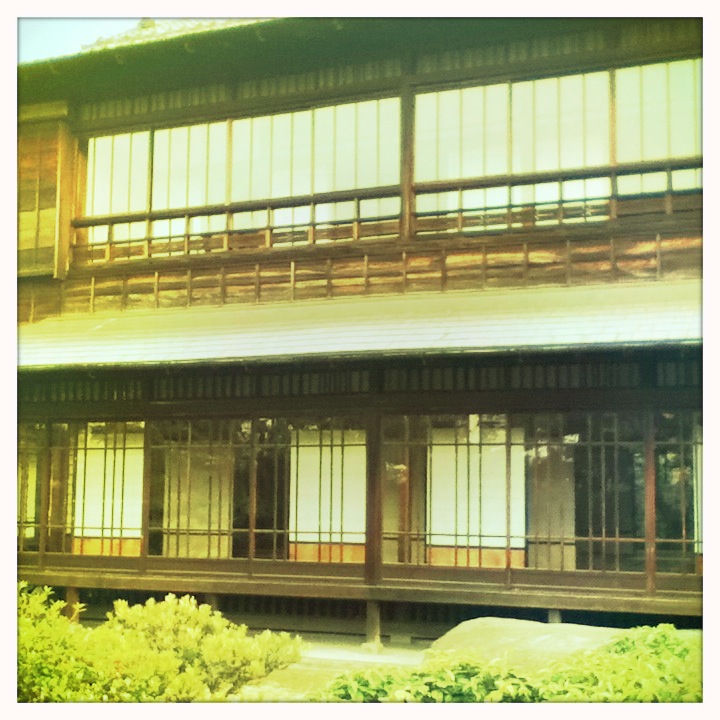
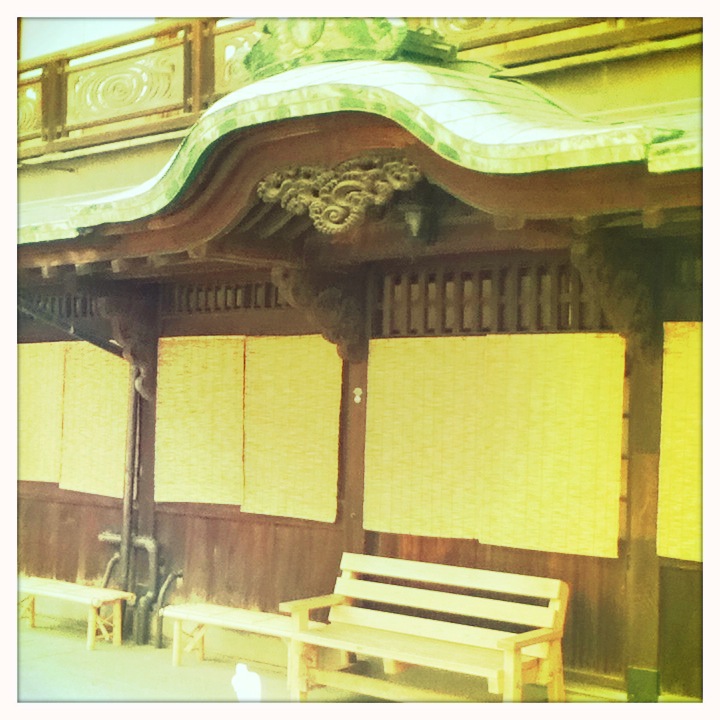
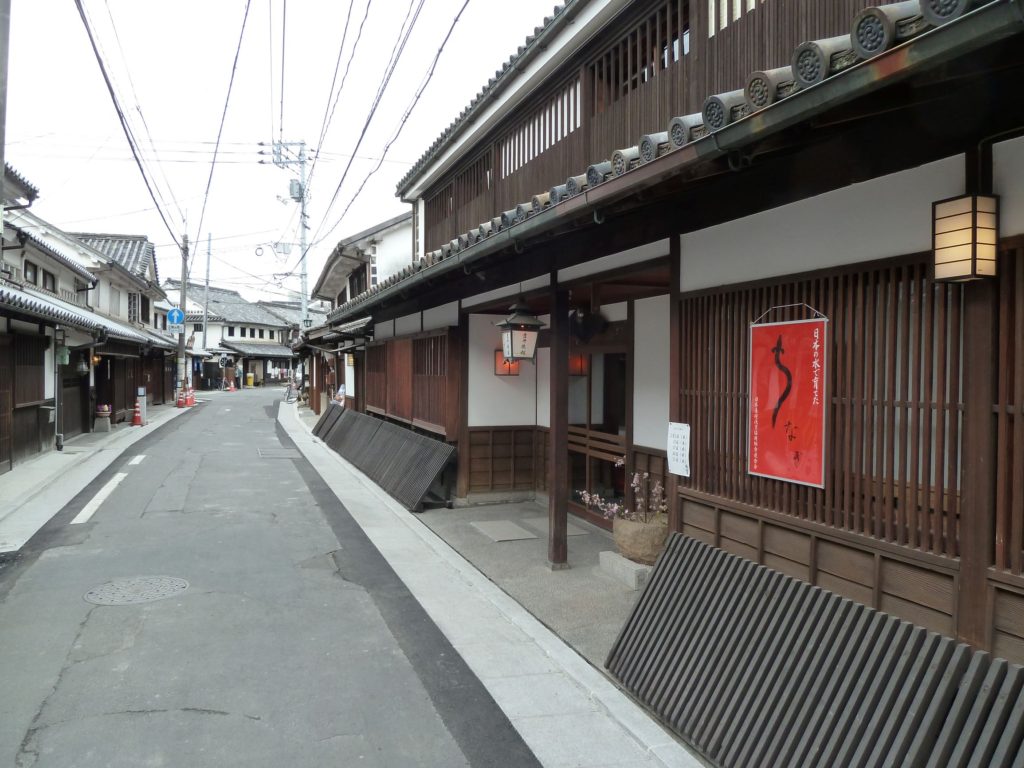
There is something lovely, pleasant and human about these Japanese houses, built mainly from wood and other local materials. They have a soft and tender quality. Not just to look at, from a distance with your eyes half closed or from very close up, where you can see the smallest details, like when a plant or flower only reveals its intricate patterns when you study its leaves and petals intently. It is also pleasant to walk around, through the corridors and rooms and the hall. Running your fingers over the wooden support beams, observing the various shades of light falling on the tokonoma in the large, beautifully decorated shoin, stepping barefoot onto the tatami floor. Even reclining on the engawa, the wooden veranda floor, and sitting cross-legged, gazing at the green moss in the tsubo-niwa has something very charming.
V
As written in the story “A Japanese house in Amsterdam”, the house must fit perfectly into its surroundings. It should not be too loud or striking, and the architectural lines (such as those of the roof, the façade, the window frames and the windows) should flow smoothly into those of the neighbours. A new building will therefore have to be constructed, the first impression of which should not be too loud or offensive. Not too flashy or ostentatious. – 2
The inattentive passer-by could even walk right past it. An absentminded cyclist might cycle past without taking offence.
However, if this pedestrian or cyclist slows down, turns around to stand in front of the façade and takes a moment to take in what is there to be seen, it should immediately become clear to this person that it is something special. It then dawns on this observer that there is a beautiful building, a house from an exotic, faraway country, placed in a familiar, indigenous environment. And the onlooker sees at a glance that a bridge is actually built between East and West.
In other words, it should by no means become a typical example of iconic architecture, something that clashes with its surroundings and seeks to provoke. For that, one would be better off visiting the Museumplein. – 3
And when inside, it will be a house where everyone, regardless of their cultural background or beliefs, will sense that it has a deeper quality. That the house is pleasant. That it invites a second, more intimate introduction. And a third. Visitors will think:
“This is not just any house. I feel at home here.”
VI
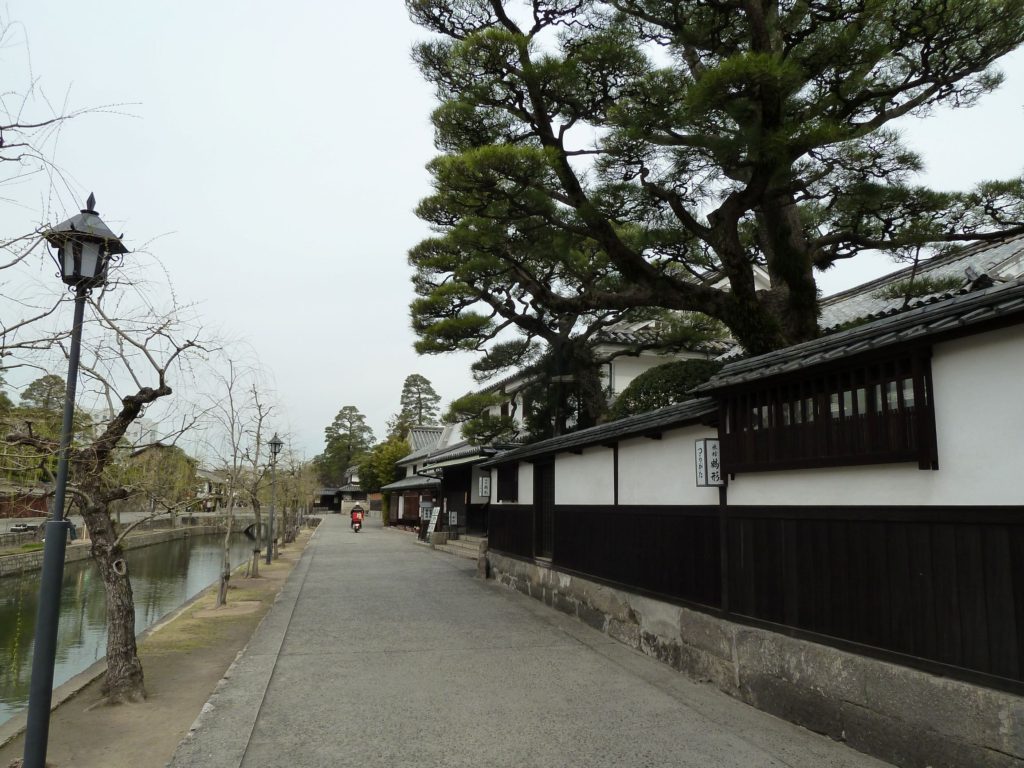
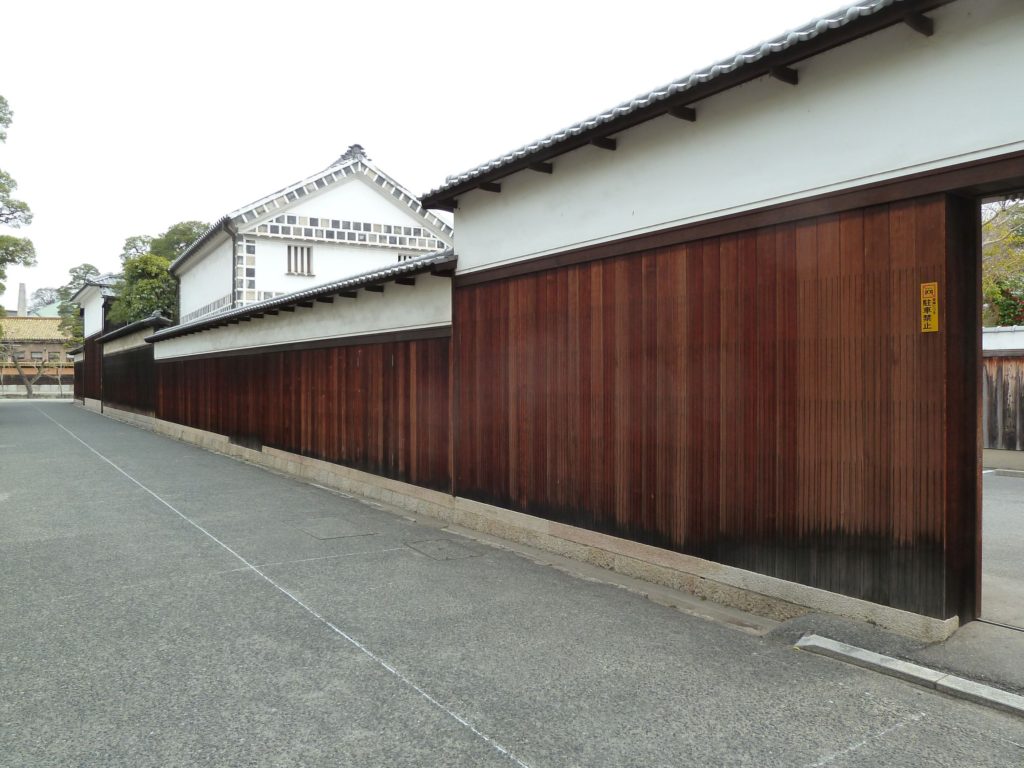
In order to fit the building into the street and allow it to blend in with its surroundings, it will consist of no more than three floors, like most of the houses in the Jordaan. The front and rear façades will be carved from wood by (Japanese) craftsmen to ensure that the whole runs gracefully from left to right, as well as from the bottom to the ridge at the top, and again from right to left. It creates a subtle continuum with the adjacent buildings.
In contrast to verticality, which is often seen in European architecture, such as in Gothic cathedrals that reach up to the sky, horizontality is one of the most important aspects of (traditional) Japanese house construction. And if you look at the traditional houses in the Jordaan, you will also see many horizontal lines. The lines from left to right in Japanese houses can therefore easily correspond to those of the buildings in the Jordaan.
In addition, there is another architectural contrast: in the Netherlands, houses have traditionally been built from the bottom up. They are built brick by brick, with the roof being the final step. In Japan, the construction method was (and still is) rather the opposite. First, the roof was erected, supported by a sturdy wooden frame, before the side walls were put in place. The advantage of this was that the room layout could be easily changed. A wooden wall was easy to move and “hang” on the wooden frame elsewhere. That is why, in our case, the structure also needs a sturdy frame with a solid roof topped with elegant roof tiles to crown the masterpiece.
How will people enter the house?
Coming from the street, guests pass through a low gate that provides access to the area between the façade and the public road. The front garden will not be large; it is merely a transition from the public to the private area.
A fence is not essential. If the front garden is narrow, there could also be steps leading to the front door, covered by a sloping roof porch (genkan).
A large wooden door gives access to the front part of the house, called mise in Japanese. This front house, which in traditional machiya (town houses) serves as a business or shop, will consist of a reception hall and office area.
Continuing to the rear of the mise, one arrives at a veranda that provides access to an inner garden. On the other side of the garden, guests will find another wooden veranda, behind which is the rear house. The entire structure therefore consists of three main parts: a front house (mise), an inner garden (engawa) and a rear house (omaya).
VII
The rear house is a separate building. It is hidden, not visible from the street and, unlike the front house, which serves more as an entrance, shop and office, it has a specific function. It is partly surrounded by an inner garden and even has a veranda at the rear with a view of a second garden that extends to the rear neighbours. The garden does not need to be large; it can be designed in an intimate way so that visitors feel as if they are hidden in a large forest. Amidst the swaying bamboo, soft grasses, colourful flowers and gentle fruit trees, a small wooden traditional tea house can be built.
A good example of an excellent layout for a Japanese garden, taking into account the small surface area, is the Japanese garden of Albert Kahn, which belongs to the museum of the same name in Boulogne, west of Paris in France.
In the back house (omaya), which is larger than the front house, one can indulge in special Japanese activities in peace, depending on the wishes of the organisation that manages the house.
VIII
For whom is the complex of buildings intended and what will its functions be?
The Japanese house will have three important functions, namely:
1) Symbolically connecting Japan and the Netherlands
Since the moment the VOC ship De Liefde ran aground in Japan, Japan and the Netherlands have been connected. Contacts have varied, with periods of love and mutual interest, as can be seen in the Siebold House in Leiden, but also with times when the two countries were diametrically opposed. Relations reached an absolute low point during the Second World War (the Japanese occupation of the Dutch East Indies). Contacts then cooled for a long time. However, interest between the two countries began to grow again in the 1990s and relations are now strong.
The idea is therefore to maintain the current ties – without avoiding discussions about the past -, and the envisioned building will play a role in this.
2) Function of the building
- Museum with information about relations between Japan and the Netherlands.
- Hall for conferences and films (such as those by Kurosawa or documentaries about Japan) or for giving lectures.
Spiritual centre, such as for Shinto and/or Buddhist ceremonies(It should certainly need to be inaugurated at the opening, in accordance with Japanese Shinto tradition. However, the house will not fulfil any spiritual or philosophical function, as these are already fulfilled elsewhere in the country.)- Meeting centre for Japanese and Dutch people, whether in business or the public domain.
- Library with special books in Japanese and Dutch.
Aryokanwith onsen- A building for art, with a permanent exhibition space for art. – 4
3) Architectural function
The house will be a pioneer in the field of architecture. It will serve as a bridge between East and West, Japan and the Netherlands, and between old and new, the past and the future.
Even from a distance, everyone should be able to see at a glance that it is a Japanese house. In fact, they should even think: ‘This is Japan! A piece of Japan in the Netherlands.’ This intuitive thought should be conveyed both on the outside and on the inside.
On the one hand, the bridge to the past and Japan is formed by the fact that the house is built according to traditional Japanese architecture, which uses a lot of wood in an extremely creative way and pays great attention to detail and beauty.
On the other hand, a dual bridge function can only be achieved if the house is sustainable and energy-neutral, such as working with urban wood, building according to the cradle-to-cradle principle or examples of providing the house with CO2-neutral energy.
4) Aesthetic function
Above all, the house must fulfil an aesthetic function. Beauty must prevail and no concessions will be made to form, function and construction when it comes to pure beauty. This requires a great deal of creativity, effort and cooperation, but it will be possible. Just like other architectural beauties in Amsterdam, such as the Rijksmuseum, Central Station and the Royal Palace on Dam Square.
As Kazuo Nishi and Kazuo Hozumi write in their book “What is Japanese Architecture”: “In the same way that laws are necessary once people begin to live in groups, so are aesthetic rules required when houses are massed together to form cities.“
IX
What will it be built from?
De Liefde, as it will appear, will consist largely of wood. Wood has long been dismissed as flammable or too expensive. Nothing could be further from the truth. In Japan, this natural building material is still often (and increasingly) used and treated and processed in such a way that it can withstand fire for a long time. In addition, timber construction is not expensive at all, especially when you consider the entire chain and its lifespan. It takes less energy to produce and can be easily replaced. And why not start using local wood again? 5 Stadshout, for example, is organic material sourced in Amsterdam and treated in the traditional way by leaving it to soak in water in the canals for years so that the wood shrinks and warps less before it can be dried and processed.
Wood is the new concrete, as they say. 6
What if the gods are not benevolent and the house catches fire and burns down?
Then it will rise from the ashes like a phoenix! Then, to appease those same gods, it will be rebuilt using the same techniques and materials, as has been done for centuries with the great Shinto shrine at Ise.
X
| Contemporary timber construction occupies a grey area between tradition on the one hand and high technology on the other. Examples include complex structures made of laminated timber, such as the enormous roof truss of the Viking ship in Hamar, Norway, and the smaller country cottages tucked away in the countryside, which are modern interpretations of the old log cabin. A wooden house evokes images of warmth and comfort, tenderness and robust protection against the storms raging outside. While providing shelter from the forces of nature, it also blends into the landscape. These are mostly romantic images, which cause many architects to quickly reject building with wood in an urban environment. They prefer to build on top of nature, rather than in nature. This is despite the fact that the general public is charmed by its qualities. And this is one of the arguments that wood retains its value as the most important material for aesthetic and sensitive architectural details. After all, doesn’t the word “wood” immediately conjure up all kinds of memories associated with tradition, nostalgia and history? No other material is so deeply rooted in the consciousness of most civilisations. This is immediately apparent in many languages, which refer to the family tree, the tree of life, the tree of children, and so on. And when we think of wooden houses, don’t images of medieval half-timbered houses, Swiss mountain chalets and Japanese temples spring to mind? Doesn’t wood also have an emotional value, in the sense that it is easy to touch and smell? Although this romantic emotional value will probably remain the main reason for its popularity, many recent construction projects have rediscovered wood and are using it to build technically complex buildings. Wood is also a material that can make a positive contribution to the CO2 balance in the atmosphere. Nowadays, wood can also be processed in such a way that it is well protected against fire. The transition from wood to brick centuries ago was probably not directly due to stricter fire safety requirements, but rather to the depletion of European forests. Wood was felled for shipbuilding or mainly for use as firewood. Now the idea is to build a house that will be constructed largely from wood. An object that lives thanks to its organic material, since the intended architectural structure should not be an entity that is defined once and for all, but one that allows for change. Change according to the wishes of the residents. Adjustments to make the house a home. After all, isn’t building first and foremost about building a home? And isn’t wood the material that most appeals to us as it brings us into direct contact with nature while protecting us from it? |
XI
Some books and websites that may serve as inspiration:
| Books: – Nishi, Kazuo & Hozumi, Kazuo (2012) What is Japanese Architecture? – Boot, W.J (2011) Keizers en Shogūn. Een geschiedenis van Japan tot 1868 (in Dutch) – Tanazaki, J. (1933) In the praise of shadows Websites: – Case Study: The Machiya – Kaname Inn – Japan Kuru – Old Tokyo – Magzhouse – The Japanese house by Kengo Kuma in Portland (USA) – a house in Seattle – The origins of the Jordaan and its history (in Dutch) by Theo Bakker. |

- Boot, W.J (2011) Keizers en Shogūn. Een geschiedenis van Japan tot 1868, Amsterdam University Press Salomé ↩︎
- The beautiful wooden horse tram depot designed by architect Abraham Salm, located on the Amstelveenseweg, proves that this is indeed possible. ↩︎
- Or visiting buildings designed in the “modern” or “postmodern” style. These buildings belong to a previous generation of architects and clients, and that was not so much interested in the influence of a new building or artefact on people. They were mainly interested in themselves. The call is therefore for a more humane architecture, entirely in line with the philosophy of architect Christopher Alexander, for an architecture in which the human scale is central. ↩︎
- An inspiring example is the wonderful Vienna Secession, which houses Gustav Klimt’s magnificent Beethoven Frieze and bears the inscription: Der Zeit ihre Kunst. Der Kunst ihre Freiheit. ↩︎
- In the distant past, Amsterdam was full of wooden houses. Practically nothing remains of these wooden houses. Amsterdam now has only two wooden houses: Zeedijk 1 (±1550) and Begijnhof 34 (1452), which is also the oldest house in the city. ↩︎
- To create a wooden building that is as sustainable and environmentally friendly as possible, you can build in the Japanese style, i.e. without using too many nails and screws. In addition, to avoid using glue, the wood can also be joined by welding (through friction). Yes, this new process really does exist! ↩︎
Comments and donations are all appreciated!
