
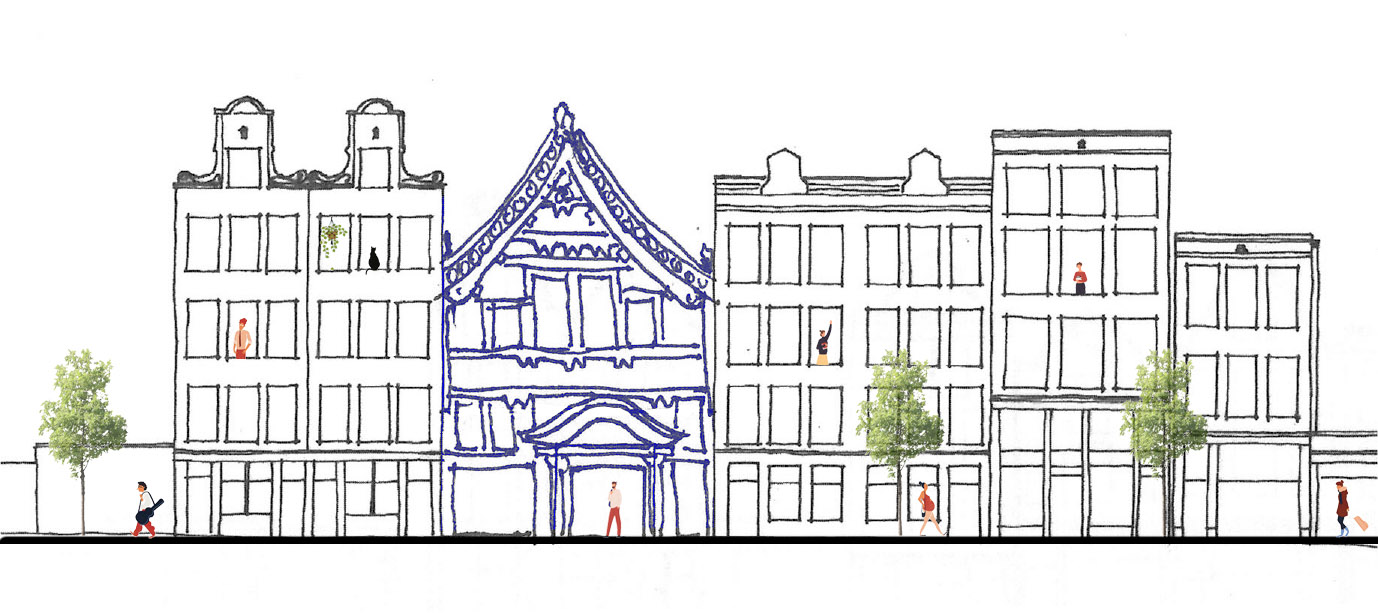
Amsterdam, 2011 – 2021
This is the first part of the series “A Japanese house in Amsterdam”. Part 3 can be found here: The Love
Translated from the Dutch version.
It is a chilly Sunday afternoon in May, just after a heavy rain shower has washed the streets of Amsterdam clean, when I leave my apartment on Koninginneweg and take the bike to explore the city. The street is quiet, perhaps people are expecting another cloudburst, and apart from the rumbling of the passing tram, only the cheerful chirping of the many birds can be heard. I pedal calmly, look around me, turn left and traverse the Vondelpark. Huge oak trees, Figure découpée, common bluebells. However, an unknown force does not allow me to stop here to enjoy the spring flowers, but drives me further. Further and further, out of the park, through a few streets, onto Leidseplein, over the narrow bridge, heading north.
To the Jordaan!
This old neighbourhood, with its narrow alleys and streets, charming houses with large windows, the many hollyhocks and wisteria – even a golden rain! – growing between and in front of the pijpenlaatjes1, pulls me like an invisible thread. And the sturdy working-class neighbourhood, where someone suddenly walks out of a door or a cyclist unexpectedly turns the corner, always strikes me as cosy and friendly. Lively and cheerful too, and fresh as a blossoming mayflower, but certainly not flashy and loud. More like a hidden maze that has to be walked through from front to back, slowly unravelled and conquered, to discover a hidden treasure somewhere in the innermost and most impenetrable part.
On Looiersgracht, I park my bike against a dark green fence next to Café Festina Lente. Above, The Dutch sky is bright blue with wisps of white. Below, graceful motorboats float in the water. I decide to continue my journey on foot and enter the neighbourhood, calmly but with a light pace. Click-clack click-clack: the leather soles of my shoes on the cobblestones! Large earthen flowerpots in front of the doors on Hazenstraat, the Vereeniging ter Verbreiding der Waarheid 2 with its enormous windows, the curved bridge over the Lauriergracht. – In the old house on the corner you can see the strong hands of luthier Vowinkel planing wood; the studio filled with female figures made of rosewood and European spruce. – De Rooie Nelis, the graffiti on its neighbour’s walls, bicycles leaning against iron fences, the canal with roses where Rembrandt spent his last years. – The Bloemstraat, Bloemgracht, Leliestraat and Egelantiersgracht – blooming city flowers. And so, I walk on, pausing a moment later to gaze at the daisies in the Tuinstraat.
I feel lost in the Jordaan labyrinth. A labyrinth that, like an enormous living creature, seems to rest languidly and contemplatively on its lazy chair, devouring everything that is offered to it. But at the same time, this great creature is remarkably open and accessible; one that opens its mouth slightly to allow what has entered to slip out again easily. For wherever you stand, whether in a narrow street, a canal, or a side alley, if you peer into the distance, past the facades of the old houses and with your eyes slightly squinted, you can always see water enclosing the Jordaan like a belt.
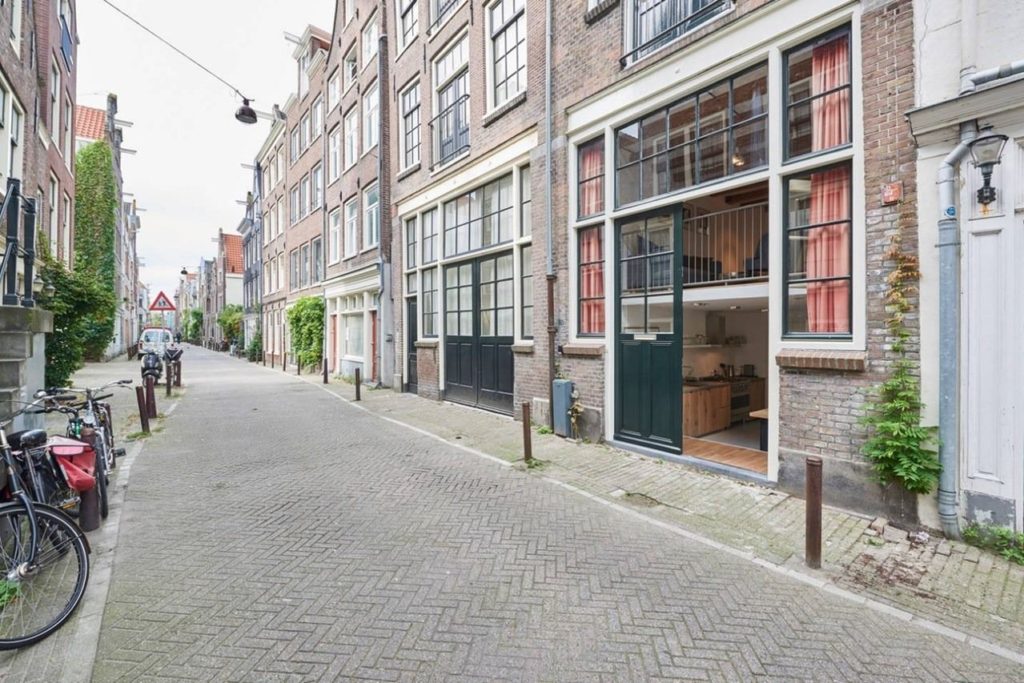
Het Nieuwe Werck, as the neighbourhood was originally called, was built in the early 17th century, during the Third Expansion. A history book tells us that before that time, it was a polder on the outskirts of Amsterdam, which is still clearly visible in the street pattern of the neighbourhood; the structure of polders and ditches was maintained at the time and people built on the available land. The building materials like bricks, beams and wooden posts were transported by barge. Preserved city maps from the period 1610-1630 clearly show that the city expanded to the west and that the Lijnbaansgracht, with its adjacent mills, formed the outer ring. The neighbourhood, built with money earned from trade activities in Asia (the Dutch East India Company reached as far as Japan), was intended for craftsmen and artisans. And there are still old, typical craftsmen’s houses from the Golden Age to be seen. 1634 is written on one façade, – De Gouden Fassant, anno 1645 – on another. And on the gable stone above its entrance, you can read that Het Suykerhoffje was founded in 1667.
Yet it is not only beauty that strikes the eye. Among the old, beautiful houses, there are some ugly ones. Cheap, quickly built buildings with pink and yellow plastic window frames that stare at you like rotten, discoloured teeth. The social houses from the 1970s and 1980s are certainly necessary from a socio-economic perspective, a valid argument, but the aesthete will quickly tell us that there is room for improvement in the streets of the Jordaan.
But how?
I continue my walk. And turn a corner. And here, in this narrow street where the sun seems to play with the many shadows, where the beautiful wooden windows and doors are mostly open, but where you still can’t quite see inside to discern what is going on in the private domain – perhaps only if standing on tiptoe. Here, where muffled sounds occasionally flow into the street and where you sense that there must be plenty of life nearby. Here, surrounded by the many centuries that stare at me and seem to whisper to me to come closer, I imagine myself, strange as it may seem, in another city for a moment. A beautiful city. On the other side of the world. And one that, thanks to its refined aesthetic and humane appearance, can be seen, just like Amsterdam, as one of the cultural centres of the world. For a moment, I imagine myself in … Kyoto. 3
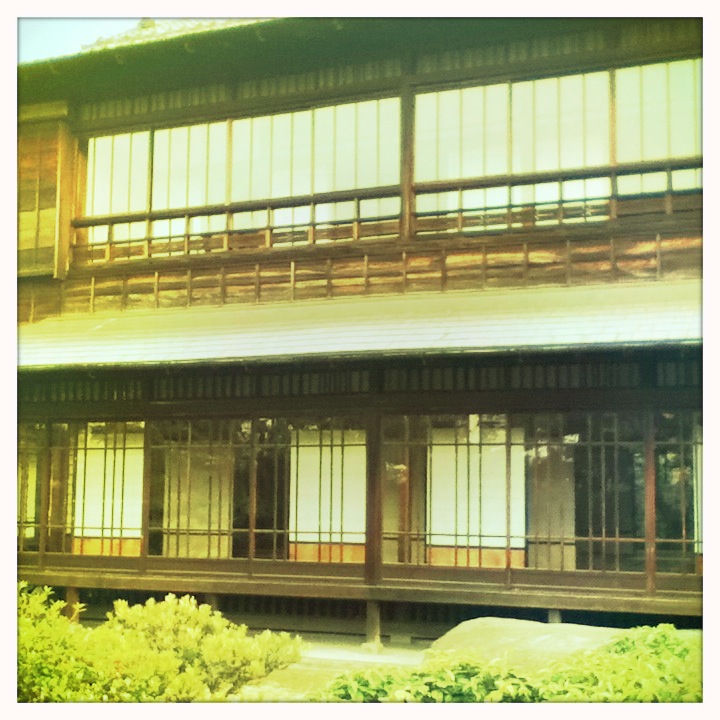
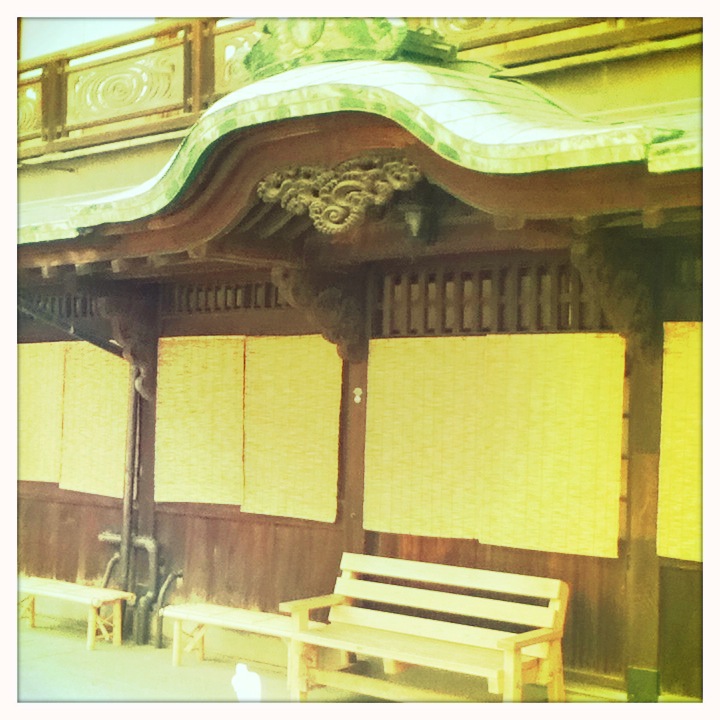
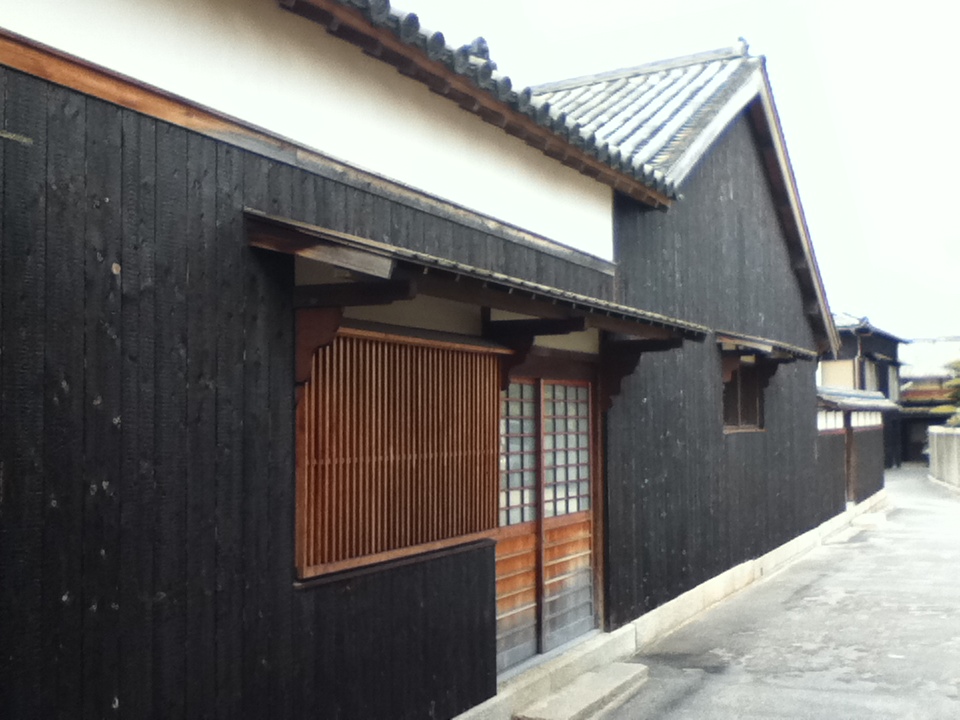
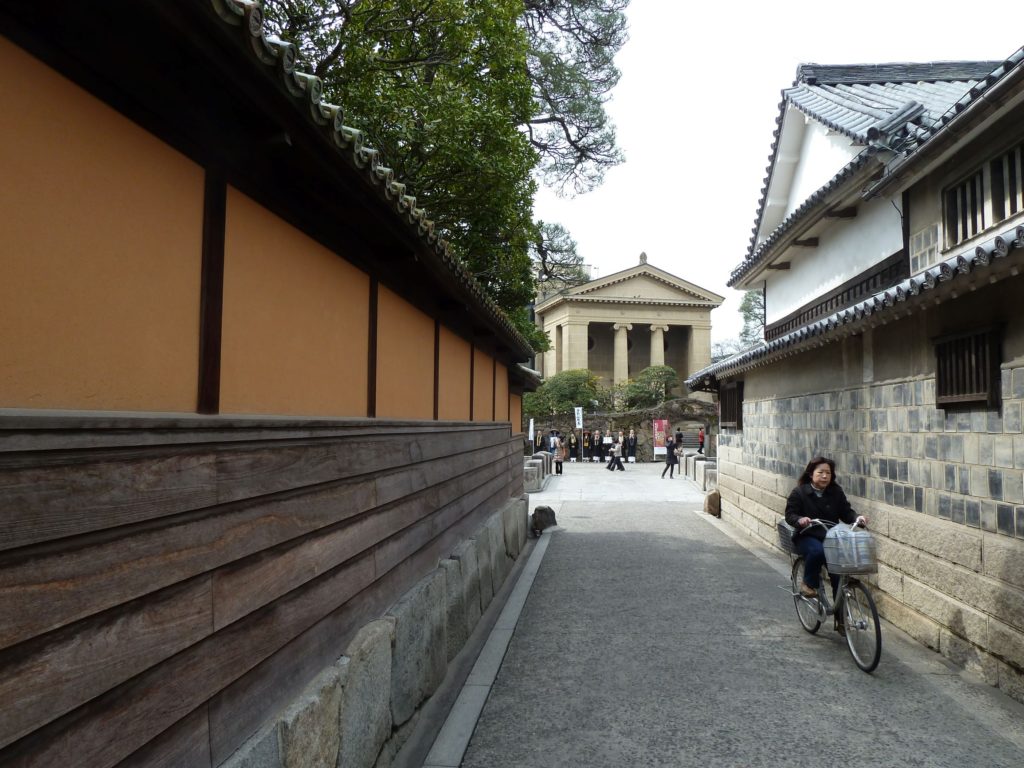
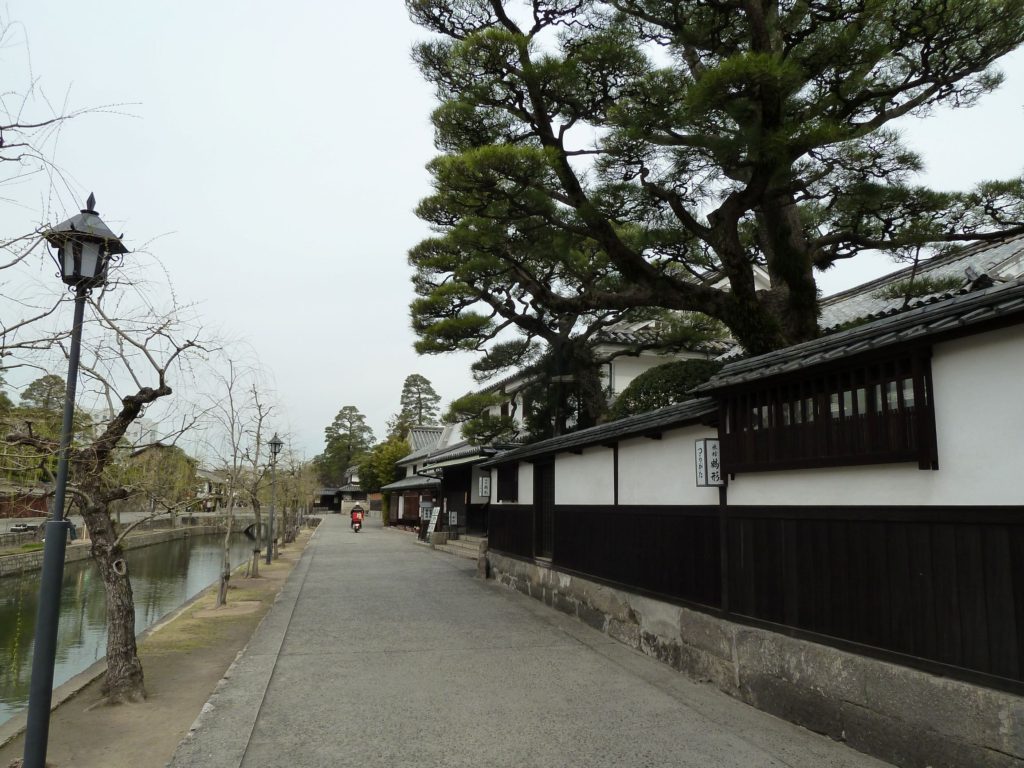
Even in the narrow streets in the centre of this Japanese city, not everything is immediately visible. The wooden houses are closely grouped, but not so close that it feels oppressive. It is cosier than anything else. And with the shoji, the sliding doors made of rice paper, family life is closed off from public life on the street. Although it is a wafer-thin separation, it still leaves room for passers-by to half hear and see what is going on in the house. And there too, in the neighbourhoods built for Japanese craftsmen, there is a sort of fluid interaction between the private and public domains, between the narrow streets and the shops and family homes. 4
And then suddenly it happens, here in the middle of the street. Under a clear sky, on that Sunday afternoon in May, a clear image suddenly appears to me. An epiphany! Here in the Jordaan, in this beautiful neighbourhood, a special house must be built! A house so dazzling and refined that it will be praised at home and abroad. An environmentally friendly and sustainable house. So subtle in form and appearance that it blends perfectly into its surroundings. A house with a special cultural function should be built here, one that strengthens and reinforces relations between the Netherlands and Japan. One that bridges the gap between East and West. Here will come …
A wooden house!
A Japanese house in Amsterdam!
- Pijpenlaatjes: typical old houses in the Netherlands that are long and narrow. ↩︎
- Vereeniging ter Verbreiding der Waarheid (The Society for the dissemination of Truth): a former school for poor children. ↩︎
- No one wrote as beautifully about Kyoto and Japan as Lafcadio Hearn. ↩︎
- A beautifully illustrated book on Japanese architecture is: What is Japanese Architecture? ↩︎
Comments and donations are all appreciated!
